
Yoga Teacher Training · Rishikesh, India
The body was never meant to fit the pose.
Discover a deeper connection with your body, your practice, and yourself.
Yoga is more than learning a posture. At Tatvabodh, traditional yoga, Embodied Alignment, functional anatomy, breath and philosophy come together to help you practise with curiosity, greater understanding and growing independence. Our immersive trainings welcome serious practitioners and those preparing to teach.
01 / Recognition
You can know the pose and still not know your body.
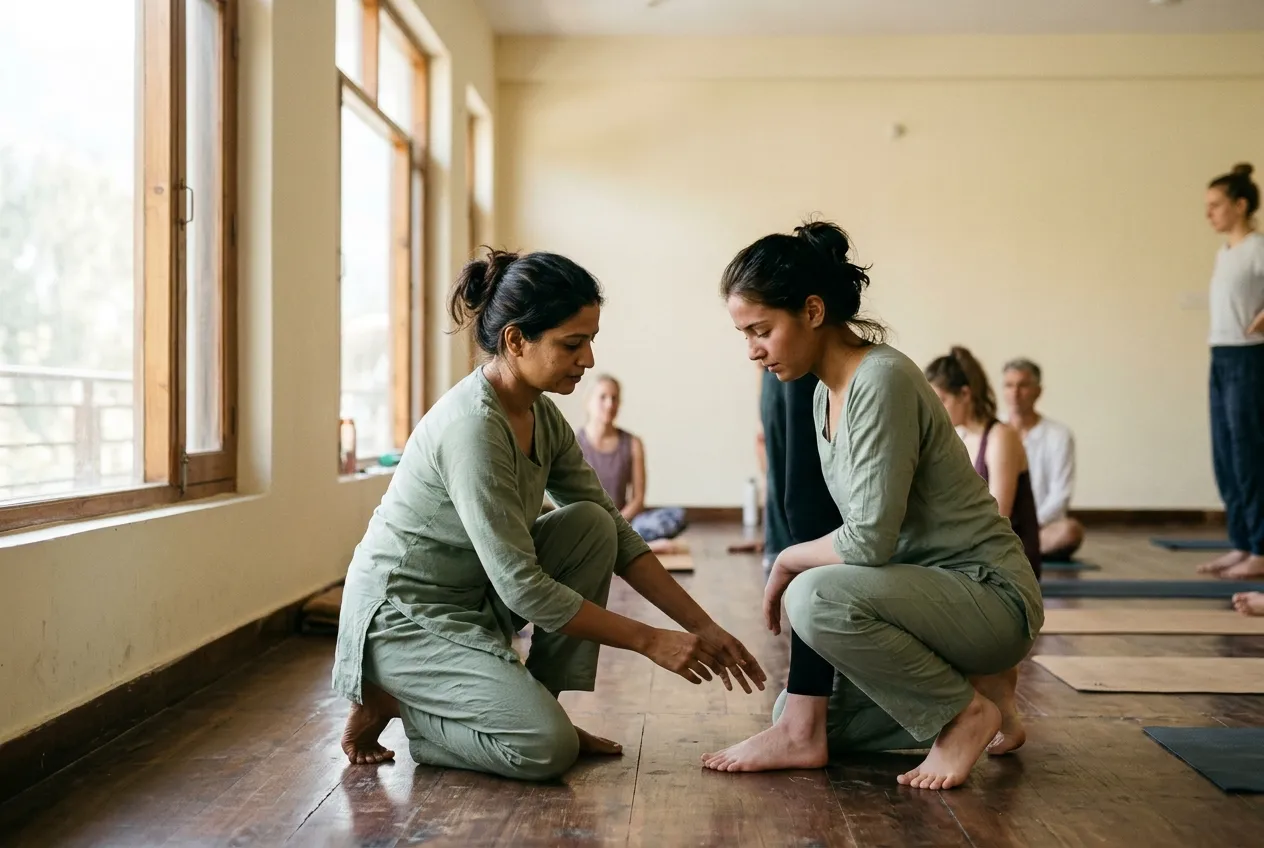
You may know where to place your feet, how to enter a posture and which instructions to follow. Yet you may still wonder why one side feels different, what makes a movement useful, or how to recognise meaningful progress. At Tatvabodh, those questions are where learning begins.
Tatvabodh Yoga & Wellness is a yoga education school in Rishikesh, founded in 2020. Our story
02 / The Tatvabodh Method: Embodied Alignment
The pose is only what you can see.
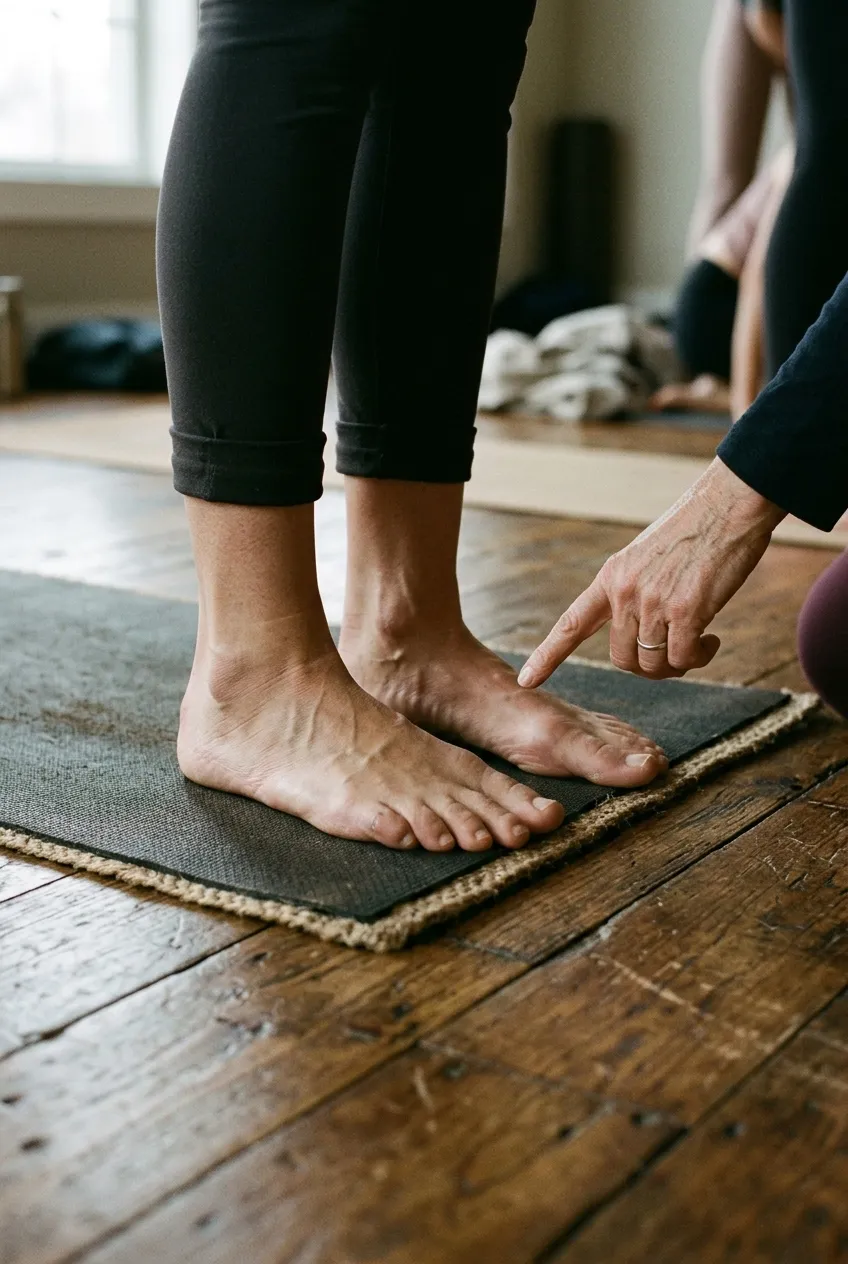
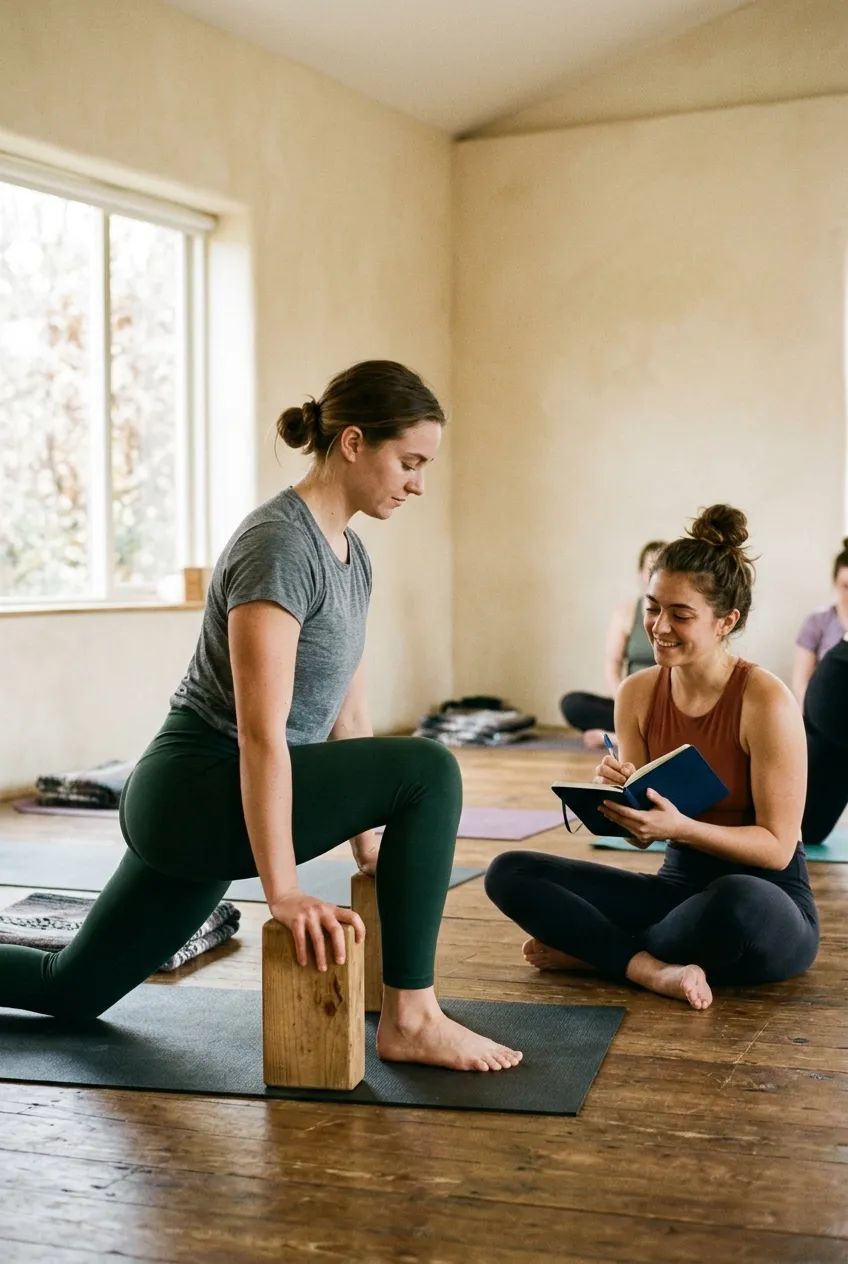
Beneath the external form, the feet meet the ground, joints respond, muscles coordinate and breath changes with effort. Embodied Alignment asks us to investigate these relationships, not simply imitate a shape. We guide students to observe, sense, understand, organise, adapt and integrate what they learn.
Unifying the body's truths with the movements of yoga instead of imposing the form of yoga upon the body.The Tatvabodh Method: Embodied AlignmentRead about our approach
Six capacities · developed through practice, discussion, observation and reflection
- 01Observe
- 02Sense
- 03Understand
- 04Organise
- 05Adapt
- 06Integrate
Try it now
Notice your feet.
A two-minute investigation. Describe before you interpret.
- Stand with your weight evenly between both feet. Notice where you feel the floor most clearly.
- Let the weight drift slightly towards the heels, then towards the front of the feet. What changes in the arches, knees and breath?
- Return to centre. Name one thing you noticed — without deciding yet whether it is right or wrong.
03 / Philosophy
The body informs the practice.
Observe before correcting. Understand before instructing.
Yoga is studied, practised and taught in relationship to the person. Traditional practice, philosophy and breath belong in that relationship alongside movement and applied anatomy.
Integrity
Represent what the school teaches and can substantiate. Preserve the distinction between an observation, an interpretation and a claim.
Awareness
Attend to the student's experience. Make room for questions, feedback and a change of approach.
Clarity
Explain what is being explored and why. Make the next step understandable without oversimplifying the subject.
04 / Programmes
Two trainings. One way of studying.
The 200-hour training is one complete curriculum for serious practitioners and aspiring teachers alike. The 300-hour training is advanced education in observation, adaptation and teaching judgement.
| If you are | What matters | Best next step |
|---|---|---|
| A serious practitioner | You can study yoga deeply even if you do not plan to teach. | Explore the 200H training |
| An aspiring teacher | Good teaching begins with observing, understanding and practising. | Explore the 200H training |
| An existing teacher | Move from familiar instructions to deeper reasoning and adaptation. | Explore the 300H training |
05 / Curriculum
Not separate subjects. One connected education.
We connect asana with applied anatomy, alignment, breath, philosophy, teaching methodology, practicum and self-practice. Students investigate what happens in movement, discuss why, then test and apply what they learn.
200H · Foundational areas
300H · Advanced areas
Describe what is visible or reported.
Offer a relevant, qualified explanation.
Test an appropriate variation.
Notice what changed and what remains unclear.
06 / Learning
The most meaningful transformation isn't always visible from the outside.
- CopyingObserving
- Familiar instructionsUnderstanding
- Rigid expectationsThoughtful adaptation
- Constant guidanceGrowing independence
These are educational aims, not guaranteed outcomes.
08 / Why Tatvabodh
What you can expect from the way we teach.
One complete 200H curriculum
Serious practitioners and aspiring teachers study the same full programme. You do not have to want to teach to study yoga deeply.
Traditional yoga, kept whole
Philosophy, ethics, breath and reflection are studied alongside functional anatomy and movement — never replaced by them.
Observe before correcting
Teaching begins with what a student notices and reports. Explanations are offered, tested and reassessed rather than imposed.
Clear information before commitment
Dates, fees, inclusions and policies are shared plainly. An enquiry is a conversation, never a pressure to decide.
09 / Student stories
What students came to understand.
10 / Life at Tatvabodh
A place to practise, study and ask better questions.
Teaching rooms, practice, anatomy study, shared meals and quiet time. Rishikesh provides context; it is not the whole value proposition.
12 / Learn
Teachings worth noticing.
Enquiry
Your next step begins with a conversation.
Tell us what you hope to understand or develop in your practice. We will help you explore whether Tatvabodh's training is the right fit.